
I recently posted on Facebook about the ongoing trial of former Minneapolis Police Officer Derek Chauvin for killing George Floyd in police custody by kneeling on his neck. There were not a lot of comments on the post, but one in particular definitely caught my attention. I'm not going to post the individual's name here; suffice to say that he is an acquaintance from when I lived on the island of Saipan. Actually, "acquaintance" is probably stretching it: we met once when we were paired up to search a certain area of the jungle for a friend who had gone missing. So we spent a few hours searching together one time a couple years ago. I did not even realize that we were FB friends until I saw this comment today. I will post it in its entirety, and then break it down with my responses.
Here is his comment:


When I initially read his comment, my first instinct was "delete and block." Because I am learning how to be a better antiracist activist, however, I decided not to go with my first instinct. Instead, after clearly stating my disagreement with his position, I took the time to address each of his racist opinions and misinformation with evidence-based facts and statistics. Here is my initial response:
I’ve watched a good bit of the TRIAL which includes ALL the video footage and absolutely does NOT support your statements. You are not only completely wrong about white people, but you’re ignoring America’s history of oppression and even enslavement of Black people. To think that character is based on the color of one’s skin is so foolish, so ignorant, so contradicted by ACTUAL SCIENCE. You should do yourself a favor and watch the medical testimony, particularly the pulmonary and critical care expert. All the experts completely debunked the allegation that his death was even drug-RELATED. I’ll post the link to the testimony in a minute.
I worked in criminal [j]ustice for many years so I have seen firsthand that White people can be every bit as depraved and evil as any other race. I truly hope that you will re-examine your feelings/beliefs in light of the facts rather than other people’s racist opinions. I’ll post a couple related links there too.
I do find your statements repulsive and personally offensive, but I’ll keep this thread open for now in the hopes that you will open your heart.
I subsequently added the following:
I’d like to add two more points: (1) You live on the island of Saipan which has an extremely tiny percentage of Black residents. Are you basing any of your knowledge on personal experience with Black people? Do you have any Black people in your life?
(2) I have not had a television in over 15 years, so I don’t watch any networks unless I specifically look something up on Google and there’s no paywall. I get most of my news from award-winning newspapers and journalists. For issues related to race, I read evidence-based scientific, sociological, and historical sources. I don’t not believe something because it is some reporter’s opinion. I go to the source. Learned that in law school.
Then, after taking the time to look up the sources I needed and verify the accuracy of what I was writing, I fully responded to his initial comment, line by line. I'm posting my responses here in the hopes of starting a discussion about how (and whether) we should respond to this kind of open racism.
This is not an easy thing to do. It took nearly two hours of reading, thinking and attempting to write effective responses to his assertions. I am not sure that this is the best approach to take. It is more like an experiment testing how this method of arguing on social media fares against other methods. I am interested to know what other methods people have tried and whether anyone has had any success in terms of the receptiveness of the other party (or other "friends" who followed the discussion).
Here is how I responded to his comment. Note that his statements are bolded bullet points, followed by my responses in italics:
I was drawn towards politics from a young age because I wanted to make the world a better place, particularly for the most vulnerable members of society. I began serving as the “Commissioner of Community Action” in the student government of my private Christian high school when I was only a freshman, having been appointed to the position by the school administration when the older student who had been elected was unable to serve for some reason. In addition to regular student government responsibilities, my position was in charge of setting up volunteer opportunities for the student body and rallying the troops to participate in community service activities. I really enjoyed it. At the end of ninth grade, I ran for re-election and won. I was also re-elected to the position the following year.
As my third “term” neared its end my Junior year, I decided that I would run for the head position: Commissioner of Student Affairs, the official title for the president. After all, there were only four other officer positions on the student government, and I had been in my position longer than any of the other officers (in fact, due to the appointment my freshman year - a year when students typically are not eligible to hold officer positions - I was probably one of the only students in the history of the high school who would serve as an officer all four years). I was the most experienced, and everyone in my small private school knew that I could do it.
I did the things that I needed to do to properly run for the head position. I turned in the required papers, informed the administrators, and started preparing to launch my campaign. Before the campaigning was scheduled to begin, the student council officers gathered for a meeting with our faculty advisor. The advisor asked if any of us were considering running for the Student Affairs position. As I recall, I was the only one of the current officers who raised their hand. One of the other officers spoke up, however, and said that he heard that another student was considering running, a student who was not currently on the student council. A sophomore. A boy.
After some discussion amongst the other officers and the faculty advisor, they reached the consensus that the boy would be a good leader. I would also be a good leader, they all agreed, but since there was a boy who would be good for the job, it would be better to have him do it. After all, the men were supposed to be the leaders. When I questioned why it would be better to have a boy when we had a girl serve as the student council leader a couple of years prior, the advisor explained that, when she ran, there really weren’t any boys who wanted the job.
This was the way that Jesus commanded, they reminded me. I remember nodding my head as if this made sense.
The boy ran - unopposed, if my memory serves me correctly - and was elected to serve as the president of the student council the following year. Sure, I could have run against him, if I wanted to go against God, the faculty, and the other student government officers. My senior year, I again held the position of the Commissioner of Community Action, but my heart was not in it. I never campaigned for another elected position again after that. I accepted a couple of appointments, and I campaigned for others running for election, but any time I thought about putting my name in the hat, I found a reason to support someone else instead.

Today, along with millions of women around the country, I watched through tears as the Honorable Kamala Harris took the oath to serve as Vice President of the United States. A man - her husband Doug Emhoff - stood beside her, supporting her as he had her entire candidacy. As she stood there, repeating the words of an oath repeated by so many men before her, her strong, unwavering voice emanated the confidence of a person who has earned their place in the world. A leader in every sense, she stood firm and proud. She stood for the country, for people of color, and for women.
She stood for girls: young girls who want to become leaders, and grown up girls who would have, once upon a time.
As my high school graduation approached in the spring of 1999, my parents told me that they wanted to get me a special gift to remember the event and asked me if there was anything in particular that I wanted. I thought about it awhile and finally decided that there was only one thing that I really wanted: The Complete Works of William Shakespeare. I think I even requested the specific edition that I later received - The Yale Shakespeare: The Complete Works.
Although I have been tempted as I am a prolific highlighter and margin-note taker, I have kept the pages of this magnificent book exactly as they were printed. I took every Shakespeare course offered at the University of Tennessee, but I always bought trade paperbacks for my courses to avoid marking up my Yale (and carrying it to class). I kept those too, of course. As there appears to be a Shakespearean gene in my family, I also inherited a full selection of paperback Shakespeares after my paternal grandfather passed away. And then when eBay was first starting out (before they had minimums on the auctions), I paid around $25 (including shipping) for a one-hundred-year-old set of 12 hardcover volumes with beautiful full-color illustrations. Unfortunately, they were desperately in need of re-covering when I bought them, and they are still in the same shape. Re-covering antique books is not cheap, so it’s a “down the road” project.
So, yeah, I have a lot of Shakespeare books, but the Yale is by far my favorite. I love the weight of it, and the silky smooth pages. I like the type, the spacing, the editorial notations. It is a beautiful book, and one of my favorite things.

After my friend Christian Soronen died, her mother gave me one of Christian’s bibles. It has a beautiful, black, leather-bound cover, with Christian’s name written on the inscription page. Like all of Christian’s books, it looks new (she never wrote in books and handled them carefully). There are several reasons why this bible is important to me, but they are private. I also do not feel comfortable sharing a photo of it at this time, but I had to include it in the list.
Passports are like journals, records of where life has taken you. I love that they are “official”, genuine and authentic records. I love what they symbolize: your freedom to pass through the world. When I had to renew my passport a few years ago, I almost wept because I had to send the old one back. (Thankfully, they actually return them to you, voided with a hole stabbed through the center, but otherwise intact.)
 Notice the holes!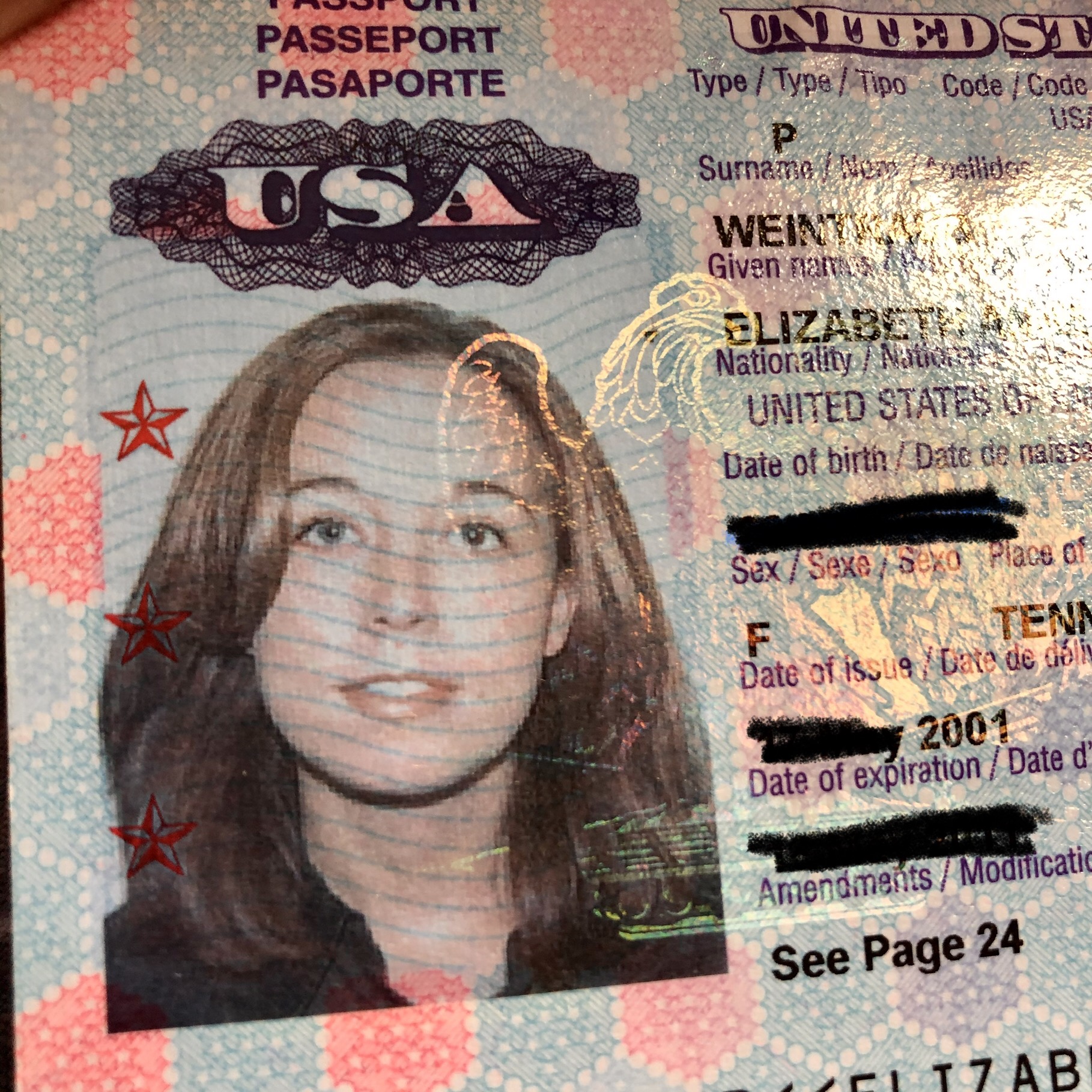
I love that the gold-embossed lettering on my dark blue passport says “United States of America,” because I am very proud of where I came from, and always cognizant of what I represent when I visit other cultures.
 Note to Self: Wash your hair before taking your next passport selfie.
I don’t think my reasons for loving my passport requires further explanation than that.
I have been a prolific keeper of journals since I was old enough to write. I have a navy blue diary with a broken brass lock that I started filling with short sentences scribbled in giant letters when I was four or five years old. Over the past thirty-five years, I have filled dozens and dozens of spiral notebooks, computer hard drives, and colorful bound journals with thoughts, experiences, travels, and memories. When I need to write, I will write on anything with anything, so many of my journals are disorganized and cluttered, stuffed with index cards and post-it notes. I have journals that I started in 2002 and completed last year. The only consistency is that I always put the date in the top right corner of the page (one day, I really hope I take the time to put everything in order, but it’s pretty unlikely that will ever happen). At any given time, the bottom drawer of my nightstand is filled with 8-12 journals with at least a few pages remaining to be filled.
When I was younger - especially during my teenage years - I used to write at the beginning of the journal that, if something happened to me, the journal was to be given unread to a certain person (usually one of my dear friends Christine, Anne, or Nancy) who would then decide what to do with it. Obviously, at the time, my main concern was my parents reading something embarrassing or angry or mean. (I don’t really include those warnings anymore. My parents know that I keep journals and I do not think they have any desire to read them.)

I do not know why I keep journals. I know why I write - it is how I process my thoughts, and I thoroughly enjoy writing. It would be impossible for me to stop writing. But why do I keep everything I write? It’s not like they are keeping a historical record of anything. Typically, I write more about my thoughts and ideas than events. I have no desire to publish them or even let another soul read them in my lifetime. The only conclusion I have come to is that they represent my survival. It is no secret that I have dealt with some pretty significant challenges in my life (as well as rather insignificant challenges that seemed more serious at the time). I think that I preserve this record of my life, in part, to remind myself of what I have overcome. And then there are things that I simply want to remember.
My journals are also significant because of what they exclude. I write a good deal about sadness, depression, and difficulties. For me, writing is part of the process of overcoming those things. There have been some periods of my life, however, where I did not write with any sort of regularity. These voids represent very dark times in my life; the times that I did not feel compelled to write are the times that I was not myself. I wrote very little during my marriage.
Besides my dogs (which really should not be classified as “possessions,” these journals are my most important possessions. In a fire, they would be the first things I grabbed (again, after the dogs). On a deserted island, just give me something to write with.
There are many other things that matter to me, from pieces of furniture and articles of clothing to unique items I’ve collected over the course of my travels or inherited from a beloved relative. There is an original, black and white, wallet-size photograph of my mother in her late teens/early twenties that I absolutely adore. There is music of course, like my six-disc Johnny Cash collection, or the set of previously unreleased Nirvana recordings that I could not stop listening to for months. There are tickets to museums, movies and music festivals, certificates, diplomas, licenses, awards, personal correspondence, and the old key to my grandmother’s house, which was my favorite place on earth. The little ring I wear every day that my brother bought for me when I was visiting him in California. And there is art. Lots and lots of art, from framed originals to prints and photographs.
I attach more meaning to things than I realized, and I think that may be why I have hesitated to let go of a lot of the “stuff” that I have accumulated over the years. So how do I detach enough from the things to declutter my life without bringing in Marie Kondo? I think, perhaps, the first step is to stop hanging on to things that I think “might be” significant to me one day. Either an item is significant or it is not. As Kondo says, if an item is significant, find a place of honor for it in your home. Otherwise, she argues, what is the point of keeping it? I agree with her, for the most part, but there are some things that matter to us simply because they exist, and not because we want to display them, show them to our friends, or write a blog post about them.
I think it’s okay to keep those things too. Just get rid of the rest.
I do not wear jewelry very often simply because I’m so active and it gets in the way or gets lost or broken. For my second post in the “Possessions That Matter” series, however, I will write about four pieces of jewelry that I love and why.

I inherited this bracelet from my paternal grandmother Avis, with whom I had a very close relationship. I had never seen her wear the bracelet. My aunt decided that I should have it. I remember when I pulled it out of the little blue velvet bag, my first impression was that it was the most beautiful thing I had ever seen. It is hard to capture its beauty in a photograph - you have to feel its weightlessness and pliability to really appreciate it.
I do not know where it came from, although I am certain that my grandfather bought it for my grandmother as she never would have purchased something like that for herself. They had the most beautiful relationship, loving each other passionately until they left this earth. So the bracelet also carries with it the love that they shared. I have only worn it once that I can recall - at my wedding in Paris.
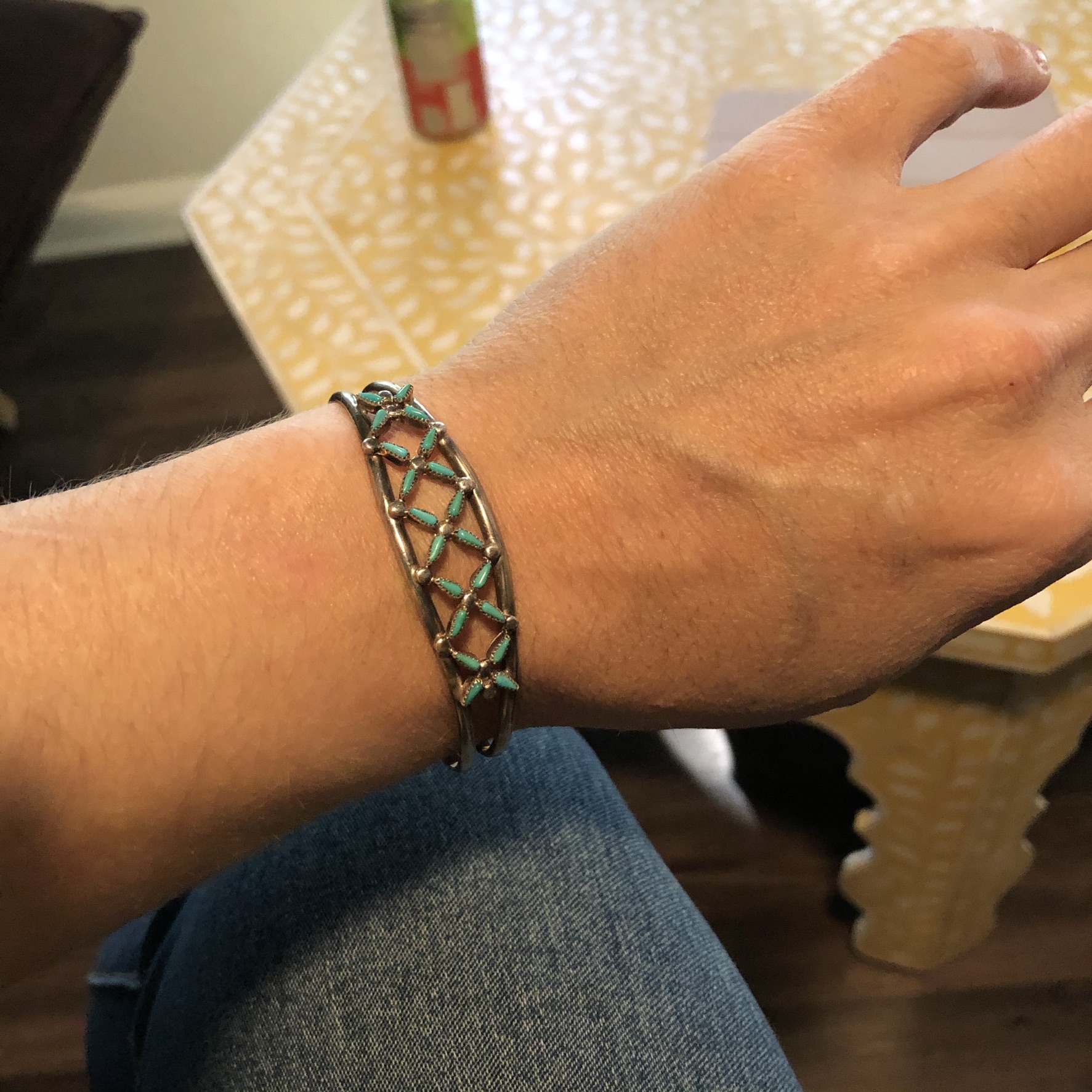
I received this bracelet as a gift from my boyfriend at the time. After his grandmother passed away, he and his mother selected this bracelet for me to have. I had never met his grandmother, but I loved his mother. It meant so much to me not only that they wanted me to have it, but that they wanted me to keep it even after our relationship ended. I’m really glad that they did, because it is something that I actually wear. I love its delicacy and its provenance. He remains a good friend, so when I look at it now, I am reminded of kindness and the friendship that can come even from the most chaotic of relationships (which it certainly was). And I think of his sweet mother.

My parents surprised me with this gorgeous watch upon my graduation from law school. I knew nothing about watches, and I certainly did not know how much I would need one as a young prosecutor. They put thought into this gift, choosing to get me the stainless steel version because it was less flashy (and because I love steel). I love its “timeless” style, simplicity, and how cool and comfortable it feels against my skin. More than that, it matters because it reminds me of my parents’ endless support for my ambitions in life.
The wedding band holds a different kind of importance to me. For a long time, it reminded me of the symbolic promise that I made and had every intention of keeping. After my husband left me, it symbolized hope that we would be able to work things out. When I eventually accepted that was not going to happen, I removed it from my finger and wore it on a chain around my neck. When I was finally ready to let go of him emotionally when I was in India, I decided that I would throw it in the Seine in Paris on my way home. But when I got there, I couldn’t do it. I cannot explain why. It really wasn’t any sort of attachment to him; it was just this feeling that it wasn’t the right thing to do at that moment. So, I stopped wearing it on my neck, but I held on to it for some reason.
Several years later, when I was living on Saipan, I became very close with one of the young survivors of abuse that I worked with. After her case was closed, she and her cousin would come over to my house to paint or watch movies and play with the dogs. Over the time that I knew her, I got to see her overcome what happened to her. Like so many of the survivors I have worked with, she became an inspiration to me.
Shortly before the time came for me to return to the mainland, the girl told me that the hardest thing for her to move past was the fact that, until he abused her, her abuser had been “a good uncle.” She had adored him, which made what he did to her so much greater of a betrayal.
Having not suffered from the kind of abuse that the girl had suffered from, there was not a lot about her experience that I could relate to personally. But I understood betrayal. A few days before I left the island, I handed her a chain necklace with a ring hanging on it. I told her that it was my wedding band, and I wanted her to have it for three reasons. One, to remind her that she is not alone in feeling betrayed by someone she loved. Two, because the shape of the ring itself reminds us that, no matter what happens in our lives, we must keep going. And three, to remind her that she mattered to me and that I would always hold her close to my heart.
The ring is one of my favorite possessions because I gave it away.
To commemorate four decades on this earth, I’m going to post some of my favorite possessions and the stories behind them. I typically don’t put a lot of stock in “stuff” because, as my late Aunt Nina used to say, “It’s just a thing.”
Also, i just moved into a new apartment and I feel overwhelmed with all the stuff I’ve accumulated. I need to purge some of it. So I thought it might be fun and useful to see and share what things really do matter to me.
I got this free shopping bag at a store in Kerala, India in 2012. I love it because of its authenticity. I have never found a good way to display it because I don’t like the idea of framing it.

I’m almost finished reading Robin DeAngelo’s White
Fragility, which is the #1 bestselling book on Amazon right now as we are
in the midst of the police brutality protests following the brutal murder of
George Floyd at the hands of Minneapolis police. White Fragility is an
important book that I hope will become required reading in high schools. Having
worked in employment discrimination law and even conducted trainings on race
discrimination, I had already heard many of the things that DeAngelo teaches.
Hearing something, or even learning it, however, does not equate to practicing
it.
If you know me, you undoubtedly know that I am a
progressive, left-wing democrat. I do not tolerate hatred of any group and I
have been outspoken in my support of the #BlackLivesMatter movement. I have close
friends of many different colors and nationalities. Although I’m not certain, I
think I was in high school the first time I joined the NAACP. I would never
intentionally discriminate against someone on the basis of race or any other
immutable characteristic.
Despite all of those things, I realized that a lot of the times when DeAngelo described someone who has taken advantage of the benefit of white privilege, failed to question their own biases and prejudices, and used “white fragility” to their advantage, she was describing me. I have no doubt that my friends – regardless of skin color - would say that I am not racist. But in reality I think that what they would mean is, “compared to most white people born and raised in the South, you aren’t racist.” While that may be true, it does not excuse my own behavior.
It does not
excuse my racism.
I am writing this for two reasons. First, I want to
communicate to every person of color who I have ever interacted with (or
ignored) that I am truly sorry for any offensive behavior and inexcusable ignorance, and that I am
always open to discussing with you anything that I have done that you felt was
racist or simply not racially sensitive. The sad truth is that my actions may have been more
memorable to you than they were to me. I want to listen and remember. I want to learn to be better. I want to stop being fragile.
Second, I want to communicate to white people who see me as
progressive that I am not immune from this, and neither are you. If I can look at my own behavior
and see racism, then you can too. And you should. You need to. If we do not do
this, nothing will change. Racism will continue to dominate every American
institution. White people will continue to exercise the privileges afforded them
by virtue of their skin color at the expense of people of color. Cops will keep
killing black people.
We all want to distance ourselves from the racist cop who
murdered George Floyd. I read that one of the police officers who was charged
with aiding and abetting in Floyd’s murder is claiming that he “did everything
he could” to stop the killing because he said things like, “maybe we should
turn him on his side.” Even he wants to distance himself. It’s easier for those
of us who were not there, who have never been witness to police brutality
directed at people of color, to distance ourselves from the murder. But it is
not good enough to say, “I would never kneel on a black man’s neck until he died,
so I’m not racist” or “I would never kill someone so I’m not racist.”
The man who killed George Floyd was in his mid-forties. He
had some eighteen prior complaints against him in as many years on the police
force. Do you think that he only acted violently at work? That he reserved his
racist beliefs for moments where he had a black man completely under his
control? Of course not. It would not be possible for someone to hide such
hatred. According to one
study, the average American knows around 600 people. How many of the 600
people in Derek Chauvin’s life knew that he was racist and a police officer?
How many of them confronted him? Reported him? When people say, “White Silence
is Violence,” this is what they mean. Chauvin’s 600 may not have known he was
capable of murder, but many of them had to know that he was racist and in a
position where he could act on his racism.
Do you know anyone like that? Think hard. What are you going to do about
it?
When I was a young prosecutor, I asked a white police
officer prior to a hearing why he had pulled over the African-American defendant. We were alone
in the hallway when he shrugged and said, “What do you want me to say?” Taken
aback, I responded, “The truth.” The cop asked to look at the citation again “to
refresh his memory.” I declined. “It’s not on there,” I said. The I asked him flat
out if he pulled the guy over because he was black. He asked to see the
citation again. I told him to get out of my sight and never to bring me another
case. I dismissed the case and told the defense attorney why. I may have even
reported it to his supervisor, but I honestly cannot recall (I reported a lot
of officers for various reasons, mostly for missing court, so this is not something that would have stood out). What I know for
certain is that I did not follow up. I did nothing to ensure that the police
officer, who was not only racist, but willing to lie under oath, never made another
arrest. I certainly could have. Instead, I felt proud of myself for berating
him and moved on to the next case. God only knows what that man has done since then. I don't even remember his name.
Please, resist the urge to say that I did more than “most people”
would have done in those circumstances. I do not judge my own morality by the morals of others. What I did was not good enough. What if that
cop was Derek Chauvin? Would the fact that I had called him out privately have stopped
him from killing George Floyd? Of course not. Getting him permanently assigned
to desk duty might have. Getting him fired definitely would have. We have to
stop patting ourselves on the back simply because we don’t do what the really
racist bad guys do. It is not good enough just to refrain from using racially
derogatory language. It is not good enough to post articles on social media about
police brutality. It is not good enough to not vote for bigots, have black friends, hire black
people, or even march for justice. Of course, we should do all of those things,
but we also need to do the important work of examining ourselves. We need to see not only our own
prejudices, but also our own complacency.
We have to acknowledge not only that we have passively benefited
from white privilege, but also that we have actively taken advantage of it. We
have to admit that doing so was racist. We have to admit that our racism,
whatever form it took, contributed to the systemic inequality in America. We
have to admit that, deep down, we knew that it would.
Facing the reality of our own racist actions is not easy. It
takes a lot of work. Some years ago, when I was coaching mock trial, I asked
one of my black students how she was going to do her hair for the competition. Her
eyes widened and she responded that she was going to wear it natural, like she
always did. When I suggested that she pull it back to stay out of her face and “look
more professional,” she accused me of singling her out. I denied this and said
that I had told many of the other girls to pull their hair back to make it less
distracting, and some of the other girls acknowledged this. The student said
she would think about it and eventually agreed to wear a headband. Of course, she did not really have a choice. I was the coach.
A couple years later, I read an article about black women’s
hair and almost immediately realized that what I had done was very, very wrong.
I reached out to the student, who was now in college, and apologized (she was
very gracious), and I moved on having learned an important lesson. I have told
this story to many people over the years, often for the purpose of helping people
realize how ignorance of black culture can lead to unintentional
discrimination. As I read White Fragility and thought back to this
incident, however, I realized that there was nothing unintentional about my
actions. I did not need to understand the historical significance of hair in
African-American culture to know that it was inappropriate for me to tell this
young woman that her hairstyle was unprofessional. In fact, as I re-analyzed
the situation, I remembered that I had actually consulted with another adult on
the best way to broach the subject with the young woman. I knew better.
This is not a confessional or a ploy to relieve myself of “white guilt” and I do not care for opinions on the morality of what I did (I am leaving out a lot of relevant details for the very purpose of avoiding that discussion – please just assume that I am correct in my assessment that I did the wrong thing in this situation). I am telling this story because I want other white people to read it and think about situations in their own lives where they have perpetuated racism. I want to encourage you to analyze not only what you did or said, but what you were thinking when you did it. If you want to discuss it publicly, you are welcome to do so here, but right now I ask only that you think about it and acknowledge it in your heart. Take the first step.
At the beach today, just sitting in the water with the dogs, beach "security guard" walks over. He's maybe in his late twenties and seems friendly enough, so we make small talk for a second, then this:




 Cabana Video
 Villa Video
 |
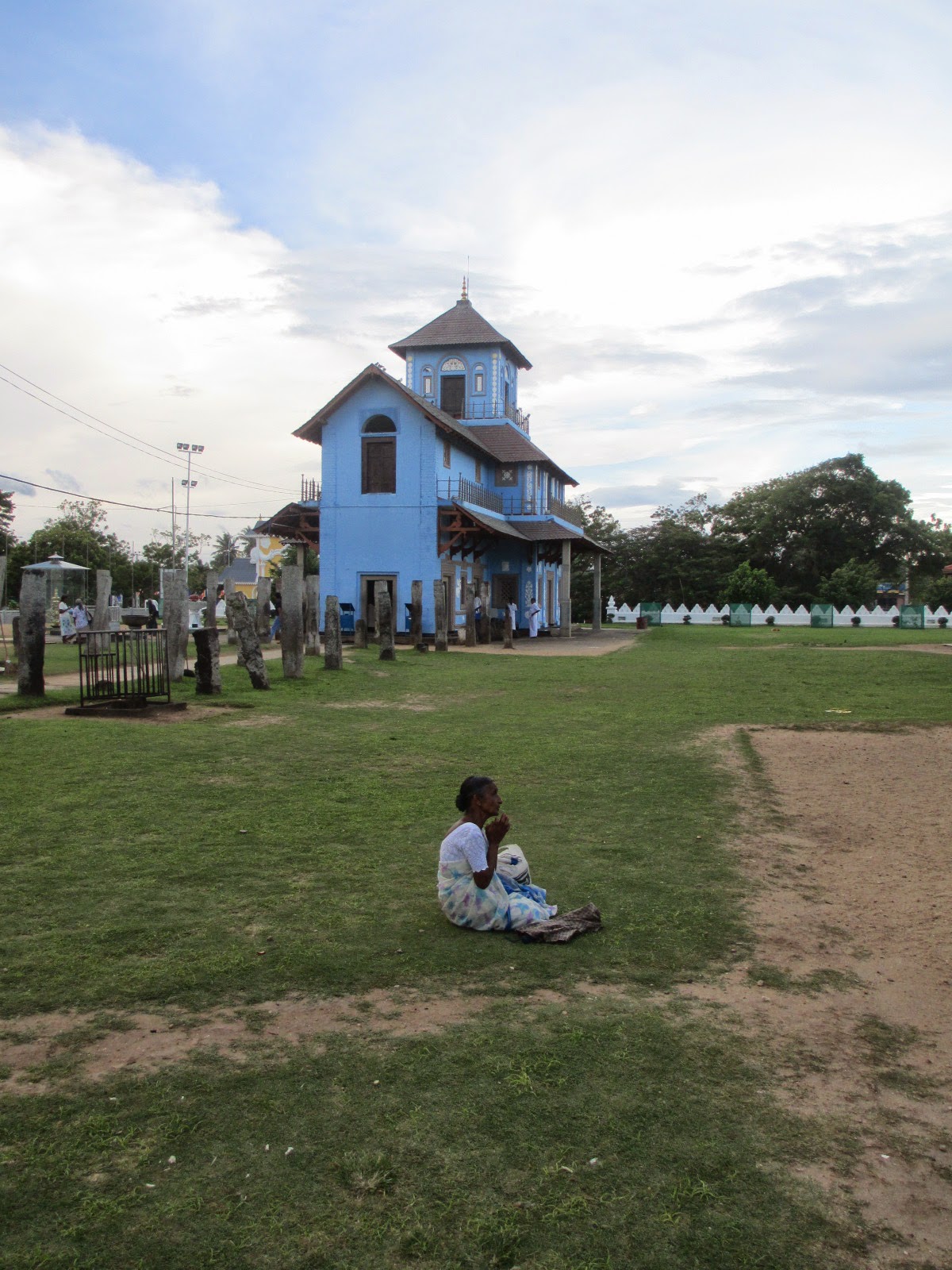
| Goyambokka Beach, Tangelle, Sri Lanka |
 |
| Happiness |
 |
| Another photo of the beautiful beach at my resort |
 |
| Drinking coconut water from an orange coconut - naturally filtered! |
 |
| Lone fisherman - I watch him every morning. |
 |
| Buddhist altar on a narrow green spot jutting out into the Ocean. A vast majority (over 80%) of Sri Lankans are Buddhist; about 18% are Hindu. |
 |
| Exploring another beach in Tangelle |


